In long-distance pipelines, pumping stations and water supply/drainage systems, large-size valves are often the critical nodes that determine whether the whole line runs safely and smoothly. These valves are big and heavy, and their stroking must overcome considerable medium forces — manual operation alone is labor-intensive, inefficient, and rarely timely or smooth. Whether the valve opens and closes accurately on command and modulates its opening stably depends largely on the matched electric actuator — what the industry commonly calls the "electric actuator package". This article explains, from the field-engineering perspective, why large valves need actuators even more, what role the actuator plays, and which matching points matter in selection.
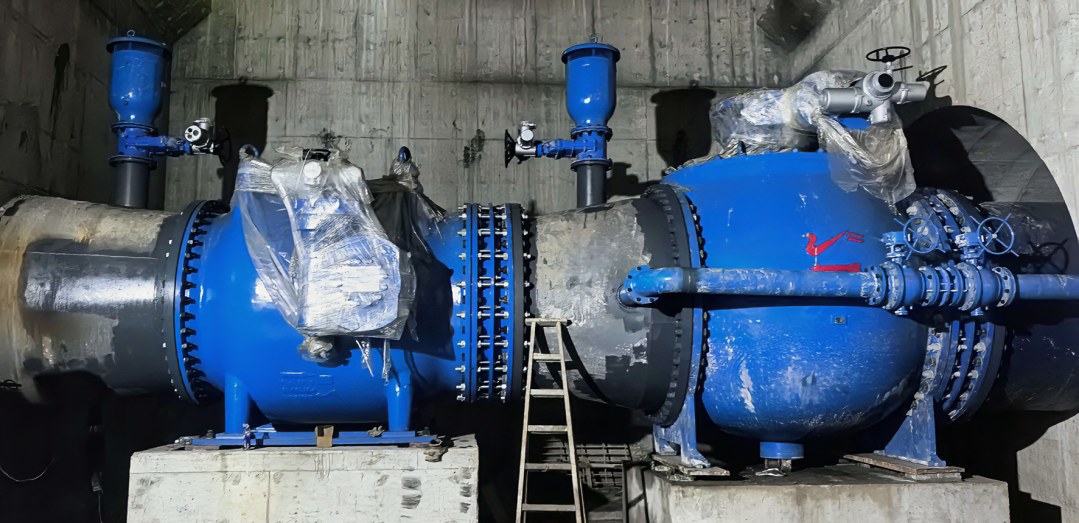
Large-size valve and electric actuator on a project site (field photo)
The larger the bore, the heavier the valve body, and the medium thrust and friction on the disc or gate rise accordingly. Relying only on a handwheel or manual gear not only means long operating travel and high labor intensity — in cramped pump rooms, valve chambers and underground vaults, reliable stroking is often simply not achievable.
An electric actuator converts external control commands into the driving force for the valve, stroking the stem or disc and modulating the opening. For large valves, the actuator is not just an "electric instead of manual" fitting — it is the key matching element that ensures the valve reaches its position and stays controllable in service.
Within a complete motorized valve package, the actuator mainly performs the following functions:
Receives control commands and drives the valve to open, close or modulate as instructed;
Feeds back valve position and running status so operators know the working condition in time;
Uses stroke and torque control stages to keep valve movement within the set range;
Retains a manual operating mode besides electric operation, for maintenance and emergency handling.
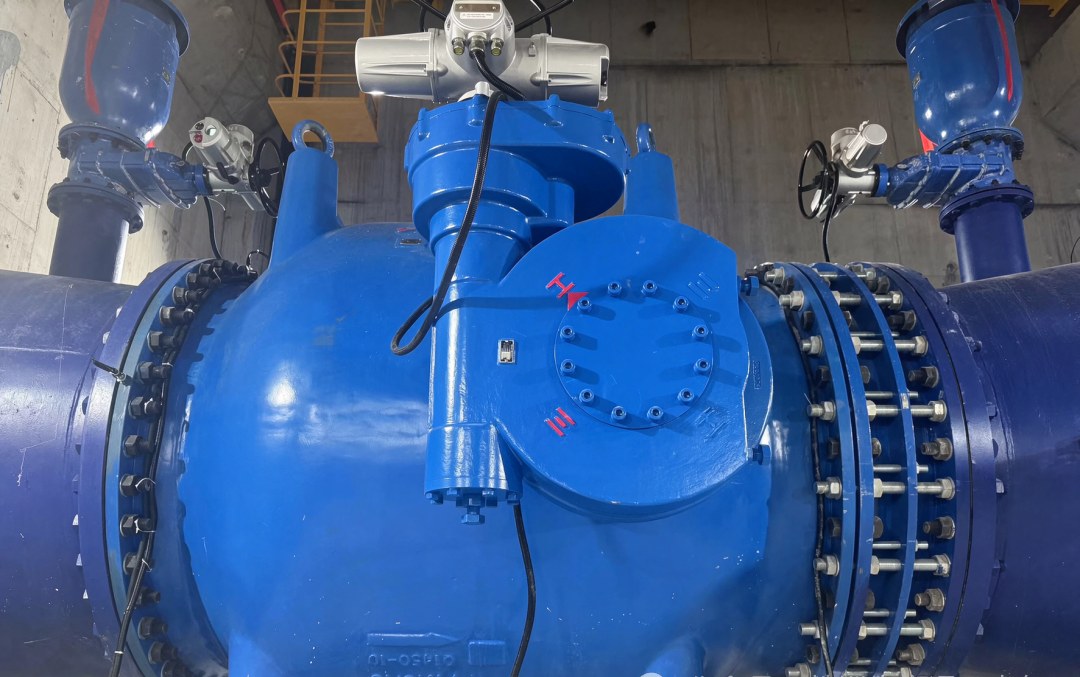
Fig. 1: Electric actuator mounted on top of a large valve, connected to the stem and gear unit (field photo)
Actuator and valve are not a "bolt on and go" combination — the two must match under real working conditions. Selection normally weighs up the following aspects:
Process match: medium type, pressure class and stroking frequency directly determine the required output capability and duty of the actuator;
Connection fit: the output drive must suit the stem structure, stroke and speed, ensuring a reliable, smooth transmission;
Control interface: control signals must tie into the plant control system and remote operation, meeting centralized and automated running requirements;
Environment: pump rooms and valve chambers are often humid and dusty — the actuator's protection and heat-dissipation design must match the site;
Installation and maintenance: actuator placement, manual-operation clearance and ease of later servicing should also be considered at the matching stage.
Every large-valve project differs in piping layout, installation space and control requirements. When matching an actuator, work from the valve body structure and site conditions first, then fix the matching scheme — rather than applying one model across the board.
The common path to long-term stable pairing: align structure and interfaces with the valve designer and packager early, complete installation checks and stroking tests on site, then support operation and maintenance. The concrete scheme should be determined by the actual working condition and valve parameters.
As key equipment in the pipeline, reliable running of a large valve depends on a well-matched, stable electric actuator. If you have an actuator requirement for a large valve, send us the valve model, bore, differential pressure and stroking time via our RFQ form and we will propose a matching scheme for your working condition.
DN800 butterfly valve in 3 seconds: the air-side scheme for fast-stroking large pneumatic valves | Gearbox supply: eight series ex-stock and custom — Juxi selection overview | JUXI JPS series part-turn actuators: ten frames from 100 to 3,000 N·m

An industry resource for electric & pneumatic actuators, dampers and heaters: brand manuals, sizing guides and maintenance know-how. Global brands in, China manufacturing out.