Below 300 MW, Chinese-made actuators of the DKJ (ZKJ), DKZ (ZKZ) and ZKD series are widely used in thermal power units. They are simple and cheap (about one-tenth the price of imported intelligent actuators), but need an external servo amplifier for open/close control; domestic servo amplifiers fail often, modulate poorly and oscillate easily, with unsatisfactory output. This paper presents a servo-amplifier function and valve-position protection implemented in the DCS, for reference.
The command and position-feedback signals are compared and amplified in the servo amplifier, which then issues 220 V DC open or close commands through thyristors.
The amplifier is an electronic board assembly in three parts: pre-stage magnetic-amplifier board, trigger board and thyristor AC-switch board; their operation performs the comparison and amplification. Component quality and board reliability therefore determine amplifier reliability. Conventional amplifiers resist interference poorly — supply fluctuations, high temperature, dust and vibration all readily cause faults.
The amplifier works like a pure integrator: whenever command-feedback deviation exceeds the insensitive band it keeps issuing open or close commands. Position-feedback devices are not very reliable; plants often see feedback fail at an upper or lower limit, and the amplifier's deviation-eliminating action then drives the actuator fully open or closed, escalating the incident. A broken-through thyristor likewise keeps the actuator powered to an end position.
DCS is now universal in thermal power plant control. Its flexible configuration, easy complex logic and high reliability allow it to realise both the servo-amplifier function and position protection, as detailed below.
Fig. 1 shows the scheme; the dashed box contains DCS software function blocks. Command and feedback are compared; after dead-band and sensitivity processing, a deviation beyond the high/low alarm settings issues an OPEN or CLOSE command. The adjustable pulse block lets pulse width and duty be tuned per actuator; dead band and sensitivity are DCS software parameters. Open/close relays are solid-state.
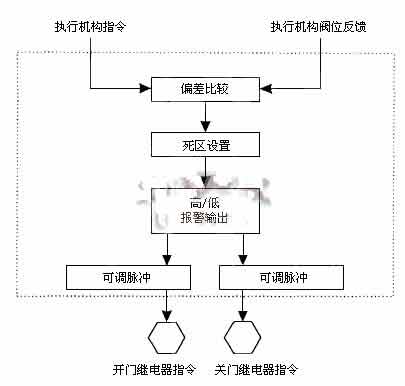
Fig. 1 Servo-amplifier function realised in the DCS
The above loop still misoperates in two cases: failed position feedback, and a short-circuited solid-state relay. To remedy these design weaknesses of the conventional amplifier, a protection circuit inserts normally-closed contacts of "prohibit-open" and "prohibit-close" relays after the open/close relay outputs — only when neither prohibition logic is active can commands reach the actuator. Fig. 2 shows the wiring.
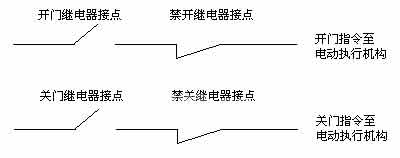
Fig. 2 Position-protection circuit wiring
The prohibit logic runs in DCS software and triggers on any of three conditions: (1) bad-quality position feedback; (2) large command-feedback deviation (positive excess triggers prohibit-open, negative excess prohibit-close); (3) feedback rate-of-change beyond limits. On any condition the protection holds the actuator in place, removes automatic control and raises an alarm.
Reset uses a dedicated button, or happens automatically via the OPEN/CLOSE buttons on the operator faceplate.
The scheme is widely applied in the DCS retrofit of six 200 MW units at Hebei Xingtai Power Generation. Over seven years of operation the DCS-based control loops have outperformed conventional amplifiers, cutting maintenance and greatly improving reliability. Through repeated SSR failures and feedback breaks the protection logic acted correctly every time, preventing escalation.
With flexible configuration, rich software functions and high reliability, DCS is universal in thermal power control. The method here is easy to implement in DCS and worth adopting by plant I&C staff.